Thursday, July 5, 2012
The Balancing Act of the Busy D.C. Professional
For those who live and work in the Washington, D.C. area, striving for a more effective and efficient balancing acts between their careers, family, and personal life, is the norm. As with any major city, the busy and bustling pace of life can become overwhelming and demanding on an individual or family. In a recent article in the New York Times, author, Tim Krieder, wrote about the hectic pace in the life of the average American, and the often self-imposed obligations and stresses they are putting on themselves. Kreider notes:
“Busyness serves as a kind of existential reassurance, a hedge against emptiness; obviously your life cannot possibly be silly or trivial or meaningless if you are so busy, completely booked, in demand every hour of the day. I once knew a woman who interned at a magazine where she wasn’t allowed to take lunch hours out, lest she be urgently needed for some reason. This was an entertainment magazine whose raison d’être was obviated when “menu” buttons appeared on remotes, so it’s hard to see this pretense of indispensability as anything other than a form of institutional self-delusion. More and more people in this country no longer make or do anything tangible; if your job wasn’t performed by a cat or a boa constrictor in a Richard Scarry book I’m not sure I believe it’s necessary. I can’t help but wonder whether all this histrionic exhaustion isn’t a way of covering up the fact that most of what we do doesn’t matter.”
For more click here:
The Balancing Act of the Busy D.C. Professional


Monday, July 2, 2012
The Not-So-Perfect Storm: Surviving the unexpected loss of power

The last few days have been more than a little
challenging for my family and me. Oh, and don’t forget the other 2.5 million
people who lost power due to a very odd storm that happened late Friday night.
Losing electricity is a terrifying prospect for
most people. Losing it for more than 48 hours is absolute misery! We are so
used to our appliances, computers, televisions, and in 95 degree heat- AIR
CONDITIONING! We have become slaves to
our modern conveniences. I’m not ashamed
to admit it! Life without electricity is beyond despair. Trying to find a way
to do the most basic tasks is out of our sphere of knowledge or ability.Friday morning, I woke with my usual set of expectations and a long list of things I had set out to accomplish on the weekend. When the power went out sometime around 10:00 p.m. on Friday night, those plans evaporated in a moment. I accomplished ZERO of the items on my list, AND a half dozen more suddenly were added! Not having power makes one feel POWERLESS!

We were very fortunate to have extremely generous
and kind family members who shared their home with us. I have no idea what we
would have done if they had not welcomed us into their home. We have a little
dog that could have become very sick in the heat, and we would have had a very
difficult time finding a hotel that accepted pets. Additionally, many of the
hotels in our area were without power, and I sure many people had the same idea.
Aside from the personal discomfort and inconvenience,
the safety aspect of an area without power can be quite frightening. When there
is no power to the traffic signals, it is sad but most people don’t know how to
drive safely. The idea that a very busy intersection can become a death trap
because many motorists don’t know that in the event of a traffic signal being
out, you are supposed to treat it as a four-way stop. It can be life-threatening if someone blows
through the intersection without a clue.
Another serious problem has to do with lack of
access to gasoline and food. MANY businesses were forced to close due to the
outage. I hate to think of all the food that has been wasted in the past few
days!
Having lights to read once it is dark, television
to watch to keep us entertained, and all of the appliances we rely on to wash
and dry our clothes, just to name a few, are just about impossible to live
without. We all should be ever mindful of how fortunate we are to have access
to electricity, clean water, and many of the other amenities we have in our
country. In many places in the world, and even within our own borders, there
are people who live without the things we take for granted daily. 
I am thankful and relieved to have the power back
on, and all the wonderful things that comes with it- to include access to my
computer and the ability to post this to my blog. I honestly felt quite lost
the last few days without having a connection to the internet and the ability
to do any work.
Spending some real quality time with my family
and relaxing was a nice change of routine and pace. But the anxiety and stress of not knowing WHEN
the power would be restored cast a shadow on the otherwise peaceful and
relaxing time we spent together. It was nice to catch up on conversation,
reading books, and just sitting and doing nothing, but eventually, the desire
to have normalcy and routine can become quite overwhelming. The CHOICE to do
nothing is a wonderful thing. Choice involves having the option to do, OR not
do. When the electricity goes out, choices go with it. There aren't any and you
find yourself hot and in the dark.

I think it is important to be ever mindful and always thankful for the miracle of electricity and the resources and quality of life that comes with it. Nurturing an attitude of gratitude and respect for all the machines, devices, contraptions and gadgets that make our lives easier and simpler, and fully realizing and appreciating the country we live in and the blessings we have.
Friday, June 29, 2012
Army Considers Combat Options for Women
A series of online conversations in the foreign policy community this week has women asking the question, ‘can we have it all?’ with predominant voices – both male and female – saying no. For female service members, however, new options may mean they can have it all – at least when it comes to taking on male-dominated billets.
As reported in a series of recent articles in the Army Times , U.S. Army Chief of Staff Gen. Ray Odierno is considering possible options towards a more inclusive role for women in combat assignments, to include Ranger School. He is asking senior commanders to provide him with recommendations and a plan this summer.
“If we determine that we’re going to allow women to go in the infantry and be successful, they are probably at some time going to have to go through Ranger school,” Odierno told reporters. “If we decide to do this, we want the women to be successful.”
See more here:
Army Considers Combat Options for Women
As reported in a series of recent articles in the Army Times , U.S. Army Chief of Staff Gen. Ray Odierno is considering possible options towards a more inclusive role for women in combat assignments, to include Ranger School. He is asking senior commanders to provide him with recommendations and a plan this summer.
“If we determine that we’re going to allow women to go in the infantry and be successful, they are probably at some time going to have to go through Ranger school,” Odierno told reporters. “If we decide to do this, we want the women to be successful.”
See more here:
Army Considers Combat Options for Women
Monday, June 25, 2012
Ingratitude: Sharper than a serpent’s tooth, indeed

THANK YOU. Two simple words, less than ten letters, but capable of producing powerful emotions and deep meaning when communicated. This leads to my question- why is “Thank You” such a difficult concept for many people?
We all feel unappreciated by our friends, co-workers, and loved
ones from time to time. In our busy lives, we can become overwhelmed or
distracted, to the point of forgetting or neglecting to thank people when they do
kind or thoughtful things for us. It becomes an issue and a nuisance when
certain people in our lives exhibit a consistent and pervasive inability to
show gratitude, appreciation, thanks or recognition.

So why is it so difficult? Are ungrateful people oblivious or stingy? Does showing gratitude cost anything spiritually or burn a calorie? I wonder about this all the time in my own life and when I see it happening to others.

Gratitude, thankfulness,
gratefulness, or appreciation is a feeling, emotion or
attitude in acknowledgment of a benefit that one has received or will receive.
The experience of gratitude has historically been a focus of several world religions, and
has been considered extensively by moral philosophers.
From Wikipedia, the free encyclopedia
What causes people to be ungrateful? Is
it low self worth, or a unhealthy sense of entitlement? Is gratitude taught, or
is it a natural occurrence? Does the ability to feel thankful and exhibit
appreciation come from a higher sense of maturity, intelligence, or character?
Why are some people either unable or unwilling to show gratitude or
appreciation?
The older I get the less patience I have
for anyone who thinks they are above saying those two simple "magic" words - “THANK YOU”. Even my four year old granddaughter knows she should say "Thank You" when someone gives her something or does something for her. Children should be taught from a very young age to show appreciation and have proper manners. There is simply no excuse for anyone not to do so anytime they receive a kindness.
If a person has a grateful spirit, it comes very naturally. Selfish and self-absorbed people live in a world that revolves around the pursuit of their own happiness and satisfaction. They either haven't been taught proper manners or they are too self-absorbed to exercise them.
If a person has a grateful spirit, it comes very naturally. Selfish and self-absorbed people live in a world that revolves around the pursuit of their own happiness and satisfaction. They either haven't been taught proper manners or they are too self-absorbed to exercise them.
I suppose being lost in an attitude of
entitlement can prevent a person from being aware of the importance of
expressing gratitude, or basic civility, for something they received from
another. Perhaps entitlement gives some people the feeling that they don’t have
to be grateful because they are owed something from the world, and everyone in
it. That attitude will hinder most people sooner or later, as the people around them tire of catering to them without gratitude or the slightest hint of thanks.

In the workplace, expression of appreciation or gratitude is often viewed as unnecessary by co-workers or superiors. I think it is critical to show and articulate thanks to anyone who gives assistance or support in any aspect of life, to include places of employment.
Ingratitude surely is one of the most
destructive and harmful of all emotions or attitudes. There aren’t many
situations that can hurt or anger as much as showing someone a kindness, or doing
something thoughtful, with little or no acknowledgement given in return. Feeling
hurt and deep frustration is just the tip of the resentment iceberg when being
on the receiving end of ingratitude.
Attempting to have a relationship with a person who
seldom or never shows gratitude is discouraging, demoralizing, and pointless. The best way to deal with an ingrate is to accept that their actions are usually “not personal”. Most chronically ungrateful people are equal-opportunity ingrates. They are simply unaware or unconscious of the feeling of gratitude.


Here are some descriptive words which correspond to a lack of gratitude: inconsiderate, unkind, uncaring, selfish, insensitive, tactless, rude, impolite, careless, heedless, reckless, negligent, unthinking, inattentive, foolish, stupid, absent-minded.
thank·less (th
ngk
l
s)
adj.
1. Not feeling or showing gratitude; ungrateful
2. Not likely to be appreciated
Once an ungrateful person has established a consistent pattern, there are choices to be made. Accepting a person for how they are and losing any expectation of appreciation is certainly a choice one could consider. Another choice would be to communicate feelings of disappointment, and hope that the situation may be remedied. A third option is to keep a distance from the person until such time that they either get the clue and open their eyes, OR lastly, withdraw any further generosity or kindness from them.
Repeatedly giving of one's time, energy, gifts, or favors is truly pointless if they are never acknowledge or reciprocated. Having a generous and giving nature shouldn't be taken advantage of by selfish or thankless individuals. Removing expectation and releasing resentment is an important part of healing the hurt that a chronically ungrateful person can trigger.

Showing and expressing thanks is more than courtesy or good manners. Expressing gratitude towards others for things they have done, or given, or sacrificed, is a defining quality of character. Individuals who consistently lack appreciation, or express thanks, show a weakness of character that is often a lifelong problem. Accepting something from another, without giving an acknowledgement of thankfulness or appreciation, is beyond poor manners.
In conclusion, we all need to be more
diligent, aware and conscious of the expressions of gratitude for others, or
the lack thereof, in our lives. Neglecting to show appreciation and thanks for
kindnesses and thoughtfulness people bring to our lives- no matter how small-
is unkind, petty, and selfish. The key is to be aware and act accordingly.
Choosing to do otherwise can bring very unpleasant consequences, and may lead to
a life of exclusion and loneliness.
“Most people return small favors, acknowledge medium
ones and repay great ones - with ingratitude.”
- Benjamin Franklin

Friday, June 22, 2012
Nepotism vs. Knowledge: The Age-Old Debate Continues with Encouraging Conclusions

Is it more valuable to “know your stuff” or be known by the right people? That is a question that continues to be debated. Evidence has shown that while it is extremely helpful to know the right people to secure a position, keeping one requires that you also know what you are talking about.
A recent academic study published in the journal Intelligence found that the popular business adage, “it’s not what you know, it’s who you know” may not be so right, after all. It isn’t enough to know someone important, you must also be able to produce and be a valued asset to a company in order to be successful and sustain employment.
In a twenty-five year study surveyed 12,868 Americans from 1979 through 2004, tracking respondents’ promotions and earnings. Using the Armed Forces Qualifying Test and socio-economic backgrounds to determine intelligence and affluence, researchers determined how those in the survey advanced, and whether their wealth and status played a role in their income and position.
The conclusion gives hope to all of those who have wondered if those in a more disadvantaged socio-economic status can really compete.
“Your future success is up to you,” says Prof. Ganzach, a Tel Aviv University researcher at the Recanati School of Management, and the study’s author. “Your family can help you launch your career and you do get an advantage, but it doesn’t help you progress. And once you start working, you can go wherever your abilities take you,” he said.
See more here: Nepotism vs. Knowledge: The Age-Old Debate Continues with Encouraging Conclusions
Saturday, June 9, 2012
Happy Birthday to my blog: One year later

Last year on the 9th of June, I took a leap and wrote my first blog post. It took me a few years to actually take that
step, but once I did, there was no turning back!
I have learned a great deal in the past year. I’ve
learned about following a dream, and carrying it through. It has been a great journey and I am looking
forward to continuing and expanding on the dream.
I feel good about the last year and the blog’s
progression. Writing down the thoughts, rants, opinions, encouragements,
feelings and musing I have inside my head has been a great exercise. It has
improved my ability to communicate and allowed my creativity to flow in all
sorts of directions.
Most days I wish I had more time, energy, motivation,
and discipline to write more often. Balancing the writing I do for “work” and
what I do for myself continues to be a challenge. 
I look forward to the future and the next year. I am
hoping to make some big improvements and am working on increasing readership
and interaction. I had hoped to reach 20,000 views by the end of today, but I
am thrilled, humbled, and overjoyed to have reached 19,783. A year ago, I could
not have guessed that I would have reached that number!
I want to sincerely thank those people who have done
so much to help me promote and advertise my blog. They certainly know who they
are. Because of them and their incredible generosity and loyal support, I have
reached readers I never would have without their endorsement and promotion. 
I am always looking for ways to improve and enhance my work. I would love to see more comments on each post, as communication and opinions are very important and valuable.

Please continue to share and communicate with your
friends and personal networks. This blog is meant to be shared and the purpose
of sharing is to give people a chance to see my work, and hopefully it will be
meaningful or interesting to them.
The greatest joy a writer has it to share their
words with others. I hope to share with an even greater audience and improve as
a writer and a person in the meantime. We’ll see what it’s like June 9, 2013.
It should be interesting to see where this goes!
AGAIN, many, many, many thanks for your continued
support and encouragement. I am TRULY and sincerely grateful.

Wednesday, May 30, 2012
Purging and cleansing my facebook “friends” list

This was my facebook status today, 30 May 2012:
“A very wise friend gave me this idea and I am going to be simplifying some things. This week is my Friends List Cleaning Week, since many people aren't actual friends, and because we rarely ever interact/communicate, some not at all. Nothing personal just trying to simplify things. I still have the subscribe option. It is pointless to have "friends" who never interact and only lurk.”
So it has come to the point where I currently have 689 “Friends” on facebook. Through the years, I have lost some, deleted some, been deleted by some, and gained many. Too many. I feel lost in a sea of friends, some of which I have absolutely no contact with at all. That is what has brought me to the point where I need to reassess the whole concept.
Obviously, I don’t have 689 “real” friends. The 689 fall into six categories:
1) Family
(This one is fairly obvious) = People I love and interact with regularly, on
facebook and in real life
2) Professional
and business contacts = Connection and interaction is based on mutual
professional or business interests on facebook, and may or may not be in real
life
3) True
friends = Deep connection, and interaction on facebook and real life
4) Acquaintances
= Casual connection and may or may not interact regularly on facebook
5) Lurkers
or silent non-interactors = People I know, but have absolutely no interaction with
in real life or facebook
6)
Social Mediaphobes = People I know, who
have facebook accounts, but never use them
** NOTE: Some people I know overlap and are more than one of the above.
Family is off limits:
I am not going to delete any of my
current family members on facebook. I am sure they are all incredibly relieved…
(That’s a joke).

The silent treatment:
If I haven’t heard a word from a
person in over a year- GONE.
If someone who regularly uses facebook, and I can tell they
use it regularly by their posts, doesn’t ever comment on anything or even wish
me “Happy Birthday” on my birthday, what is the point of keeping that person as
a friend. I realize some people don’t get on facebook every day, so if they
miss a birthday one year, that’s understandable. I just think it is stupid and
pointless to keep friends who never interact or have anything of substance to
say.

Ragers and Debbie Downers:
I can’t deal with these types and I am making an effort to cull them from the list. The negative energy they give off could dry up Niagara Falls. Sure, everyone loves to vent and gripe on facebook from time to time. It’s fun!
The Rager is that person who is angry more than five times a
week about something idiotic or ridiculous- e.g. “My neighbor put the trash out again and it blew all over the street, this time I’ve had it!” or Debbie or Donnie Downer with their “I can’t
take the people I meet on Match.com, they are all big losers.” Seriously, I have enough negativity in my
day. We all love t spill our guts and commiserate, and I can appreciate the
desire to vent as much as the next person. There has to be some balance, and
don’t overload your friends with every meltdown in your life.

The Political Animal:
Yes, I get it that you don’t like this party or that party or this candidate or that candidate. If you post about politics more than 4 times a week, I have got to let you go. One of the most important aspects of facebook and social media relationships is sharing common values and attitudes. I can respect other points of view and I do! I have friends of every persuasion and walk of life. The difference is I don’t want to be PLASTERED with partisan or extremist propaganda during election time or hear the wailing and gnashing of teeth about every political complaint. It’s too much. Most of the time, I filter it out, but I am starting to think I don’t need “friends” who are this neurotic about politics.

Lurkers:
They’ve got to go. If I see that a person hasn’t
commented or posted anything in this calendar year, there is honestly no point
in keeping them as a “friend”. It is like bread- there is a shelf-life.
I love facebook for the connections and ability to stay
connected. If it wasn’t for facebook, I would have been able to find and
reconnect with people I hadn’t seen or heard from in 20 or 30 years! It is a
heck of a lot cheaper and easier than a private detective.
Last year, I wrote a post called, “What does a facebookstatus say about the face behind it?” In that post I mentioned people who have absolutely NOTHING to say, EVER, on facebook. I don’t understand why they even join. Does lurking bring them happiness or is it just a morbid curiosity to peer silently into the lives of others? I don’t understand it at all. I know that some people are not as extraverted as others, but if it doesn’t appeal to a person, why join in the first place? And even more puzzling, why send people friend requests or accept theirs?

Don’t Ask, Don’t Tell:
No, this category has nothing to do
with sexual orientation. It is exactly what it sounds like- no communication. I
don’t need to stay friends with people who aren’t going to communicate with me
on any level. I am not asking for a lot. How about a “like” here or a comment
there. How about a meaningful status that say SOMETHING about you other than
what you had for breakfast. I think I am going for quality instead of quantity.
I am losing my need to stay connected with every person I have ever known. If
someone wants to be a part of my life, I believe they will make the effort to
show me, even if it is in a tiny way.
We all have a limited amount of time, energy, and resources.
It is futile and wasteful to spend a minute of time or burn a calorie on anyone
who doesn’t reciprocate or engage. Why would anyone with an ounce of self-respect
continue to pursue or reach out to people who aren’t willing or able to return
the favor?
There comes a point where you don’t want to be the only one doing “the
work” or making the effort. Even casual relationships need a measure of attention.
The key is for both parties to have balance and attempt to give some indication
that they enjoy the relationship/friendship/partnership or whatever it is that
exists between them.

Obviously professional and business relationships are just
that and don’t require the same level of effort. I don’t intend on purging any
professional or business “friends”. There is an unspoken understanding that the
connection is on the surface and doesn’t need to be attended to in the same way
a personal connection should.
Reconnecting is one of the best parts of facebook! It is wonderful to hear from friends who live far away, to include my relatives in Germany, and see their photos and share my own. It is so much easier than email and much more creative and dynamic. The benefits are too numerous to list (maybe another post later), but there is also a cost.
As I stated in my opening line- I am only trying to simplify
my life and cut down on extraneous distractions. I CHERISH most of the people I
interact with on facebook, for many different reasons.
I am not trying to
hurt or annoy or anger anyone. It is just time to sort it out and clean it up.
Life is too short to try to be all things to all people. I will still have the SUBSCRIBE option. I hope that when I cut my list of friends down and take someone off, they understand it is without malice or anger. It is simply an exercise I recommend for everyone- SIMPLFY your life and focus on the people and things that bring good, positive, exciting, and engaging things to your life.
Weed out the things that distract or distance you from what
you want in life. AND MOST OF ALL- Don’t hang on to anyone or anything that
takes up time, focus, or energy from you without giving something, no matter
how small, back in return.
So, let me know what you think?
Wednesday, May 23, 2012
What happened to communication? The slippery slope of lousy language

Poor
communication skills have reached an all-time low. This past week, NPR reported that many members of congress have the communication skills of a 10th grader. It used to be the question, “Why can’t Johnny, or Janie, read?” Now the
question is why can’t they read, write or speak coherently? It isn’t a literacy
issue or problem of a lack of education. Inexcusably poor communication is being
exhibited by those with advanced degrees and a good education.
Lousy communication,
and shabby language skills, isn’t simply an inability to speak or write
correctly. There is also a pervasive and insidious inability to anticipate or
understand reactions which result when certain words or phrases are used in
conversation or communications. 
On the
internet, examples of epic communication failure happen daily. Every hour of
the day, someone makes a seemingly innocent comment and unintentionally creates
a stir. WHY? Because they aren’t able to express themselves or actually state
what they mean to say. And then there is that special species of internet
creature called a troll, who lives to cause uproar on social media sites or
webpage comment sections. They use communication like a weapon. Not a rapier
wit or a pen that is mightier than the sword, mind you. These people use words
like crude and blunt objects. The messages are ragged, coarse, and ugly.
Poor
communication is a multi-faceted problem. I will present three different types
of poor communicators. There are so many more, but I only have so much time to
delve into this topic today. I will build upon this theme again at a later
date.
“That’s
not what I meant!” But that is what you
said.
The
first type of poor communicator- I will call this person the ABRASIVE
COMMUNICATOR, is the guy or gal who apparently has little to no insight into
the level of inappropriateness their communications convey. They really don’t “get
it”, and aren’t able to understand how rude or obnoxious they sound. They routinely
step in the “stuff” and are stunned and surprised when their facebook friends
delete them. They don’t get the hint that the words they use are generally
offensive or inappropriate.
A
chronic inability to understand what is socially acceptable in communication is
often at the heart of misunderstandings that can cause relationships, and even
marriages, to break apart. Just as with the law, ignorance is no excuse. It is
called, GET A CLUE! Doing the same thing
over and over again, and expecting a different result, is the definition of
insanity.
#*&^#!!@%*^%
and if you don’t like that,
*&#%$%%*#!”
The second type of individual is the ANTI-SOCIAL COMMUNICATOR. These folks are hard to manage in any situation, be it work or personal life. Their communication style is more than abrasive: it is downright toxic, abusive, and mean. Most of the nasty remarks and vitriol that comes out of the mouths, or pens, of these people can challenge the most patient and laid-back individuals. Insults, jabs, crude slurs or nasty remarks are their trademark- think Rush Limbaugh. Many of them consider themselves to be humorous or superior. In reality, they are usually pompous bullies.
“I have
an MBA and I know everything about anything and I can do what I want, even if I’m
wrong.”
The
third type of poor communicator is not as rude as the two former communicators,
but just as incredibly annoying and difficult to deal with. It is the CLUELESS
COMMUNICATOR. Everyone has come in contact with someone who is simply unable to
express a thought or idea that makes sense. Random words or inexplicable sentences
are strung together without any logic, thought, or meaning. Working with someone who can’t
write a simple email, let alone a presentation or complex deliverable, can
drive a normal person insane; especially if they refuse to accept that they can’t
write well and that the work they are putting forward is garbage.
I don’t
know what happened to communication in the last 30 years, but I honestly
believe that something has gone terribly wrong on many levels. Poor grammar, inconsistency,
lack of attention to detail, careless mistakes in spelling and usage are just
beginning of the list of shameful communication practices.

Perhaps
most people don’t care or aren’t aware, or maybe they are too distracted to
notice; but I, and many others like me, notice and we are mad as hell. It is awful
to see a website with mistakes and depressing to know that someone either didn’t
care enough or wasn’t smart enough to do the job right. Is there no shame or
conscientiousness? How did that happen?
When did it become tolerable?
So we
have our three prototypes of poor communicators. All three are annoying and
maddening, for different reasons. At this point there are probably more words
on the internet than grains of sand on the beach; but what is being written, and
how it is communicated, is a collective linguistic and literary sea of sewage? Are
we valuing quantity over quality? Does
anyone THINK before they speak or write? Is John or Jane Q. Public concerned with how
they express themselves? All signs point to ABSOLUTELY NOT! Proper and civil
communication has little to no value, and it is destroying our ability to
understand and be understood. 
So what can anyone do to improve communication in their personal and professional life? First and foremost, PAY ATTENTION! THINK! REFLECT! If people would put a little more thought into the words that came out of their mouths, or the things they wrote, and how they wrote them- I sincerely believe it would create a more insightful and civilized atmosphere, which in turn would improve intellectual capacity, human relationships and quality of life.
Call me crazy, but I dream of a day when words are seen as the valuable and precious things they truly are. If the average person could gain an ounce of appreciation and passion for proper, correct, and polite communication, imagine how things would change! How amazing would it be if there was a movement towards a more civil, thoughtful, mature, and professional style of communication? If that happened, I honestly believe it would change the world for the better on so many levels.
Change
often begins one person at a time. Before speaking or writing, take a moment
and think about the real value of quality, civil, and concise communication.

Monday, May 7, 2012
In honor of my mother: A Mother's Day reflection on Alzheimer's

This Mother’s Day has more meaning for my family than it has in past years. Our beloved mother, Gisela Ullmann Rodriguez, is still with us in body- but the wife, mother, grandmother, great-grandmother that we have known and loved for 50 years, is not wholly with us this year.
My mother is slipping away from us. There isn’t anything that can be done about it. She has what appears to be a form of Alzheimer’s disease.
It all started around January of 2010. It started with very little things, and it didn’t really become alarming until we noticed she was forgetting birthdays and other details she would NEVER in a million years, have forgotten.
When I was growing up, my mother was one of those “SUPER MOMS” who worked outside the home in addition to being an incredible homemaker. Even after working in an office all day, she had an amazing dinner on the table every single night. We were very proud of the fact that she was a valued professional in the workplace, and she was an incredible role model for my sister and me.
As I got older and became a mother to my own children, I could never understand where she got her drive or energy from all those years. She and my father raised my sister and me to have a very strong work ethic; but I could never believe or understand how she managed to accomplish all the things she did. She was renowned for her drive and ability. She lived up to her German roots and never forgot where she came from.
In addition to being a driven wife and professional, she has always been a devoted and patient mother and grandmother. And while she could be very stern and serious, she has always had a great capacity for love, compassion, and generosity. She retired in December, 1999, from a very stressful and demanding job as an Office Manager/Property Manager of a local condominium. Sometimes she worked close to 60 hour weeks. It wasn’t unusual for her to be on 24 hour a day call and have to go to work on weekends. Always the consummate professional in every regard, she was a relentless advocate for residents, as well as staff.
In previous posts, I have written about my family. It can’t ever be stated strongly enough that my mother was the glue that held our family together. In her prime, there was no problem too difficult, no issue outside of her ability to cope. In dealing with her daughters and grandchildren, she was often tough, but always fair and compassionate. You didn’t want to aggravate her or make her upset, but even if that happened, she was quick to forgive us and move forward (not so much with my father).

My mother, Gisela Ullmann Rodriguez, has been the epitome of the modern woman. Born in Köln, Germany, a couple of years before the onset of World War II; her life began amid chaos, danger, and deprivation.
She came into a tough world at a very tough time. She was a child of war, and that experience has been a defining one throughout her entire life. As a small child, she lived in a world of uncertainty and dread. Her house burnt in a bombing raid and the family had to relocate with relatives far from the city life she was used to in Köln. Her one salvation was the strong extended family bonds and the resilience of her mother’s family, which held them all together throughout the years of deprivation and danger. When my grandfather returned from his years in a British Prisoner of War Camp, she didn’t recognize him. She was ten years old. War was the thing she knew best, and that had a powerful impact on her.
My mother loves my husband, David, because he is, to her, the embodiment of the things she knows and admires most. She respects and admires his ability to DO things and makes things happen. She has a soft spot in her heart for him because he reminds her of her father- a man with many strength, and weaknesses, a man who knew about war and hardship, a man of action and determination, and a man with rough edges and charisma.
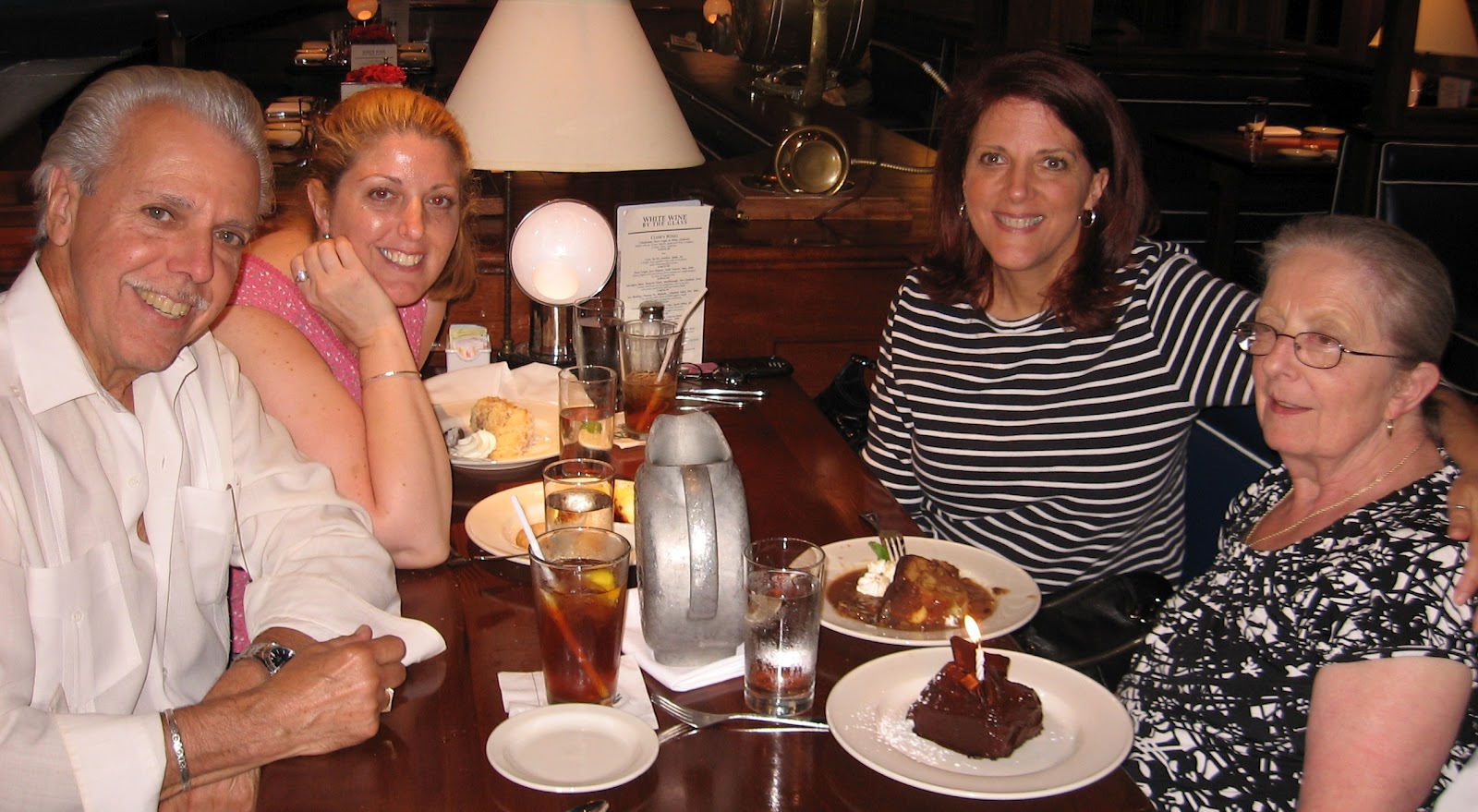
Nothing pleases my mother more than seeing someone do an honest day’s work. It isn’t that she didn’t like to have fun; she just wasn’t very good at it. Relaxation and rest has not been her strong suite. In her world, she reserves the highest respect and admiration for those who provide service to others. She sees something familiar to her in David’s soul that none of us in the family have- a first-hand, personal experience, and understanding of war- and all of its sounds, and smells, and sights. They both have lived in war, and that is a bond that is beyond our comprehension.
I could write a book about my mother’s life. She has led a fascinating one. Nothing glamorous or very exciting, but extraordinary in her ability to confront extreme difficulties and pull together under extremely stressful circumstances. That is why it is almost unbearable to accept and fathom what is happening to her. It is so unexpected and out of character. How could this happen to someone who was so detail-oriented and never, ever, forgot ANYTHING?! She remembered EVERY friend’s birthday and anniversary. Her memory was almost annoying, as she rarely forgot even the most mundane details. Her mind was truly like a steel-trap.
And now, more and more, she can’t recall what happened 20 minutes ago. Sometimes the things that happen in life are crueler than you could have imagined possible. Because the worst part of it is that the things she remembers most vividly are those things that happened during her difficult childhood- war, separation, loss, and family. I fear for a day when that is all she remembers.
So we are grateful to still have our beloved mother with us. We still enjoy her company, and she enjoys us. We have to adjust, and that is a character-building experience. Is it ever? We aren’t alone. There are millions of families who have, or are, or will be, going through what we are now going through. We take it a day at a time. Our love and our time is more precious than ever. Each day she remembers is a cherished gift. We don’t squander it as we did. We don’t take it for granted. 

Subscribe to:
Posts (Atom)